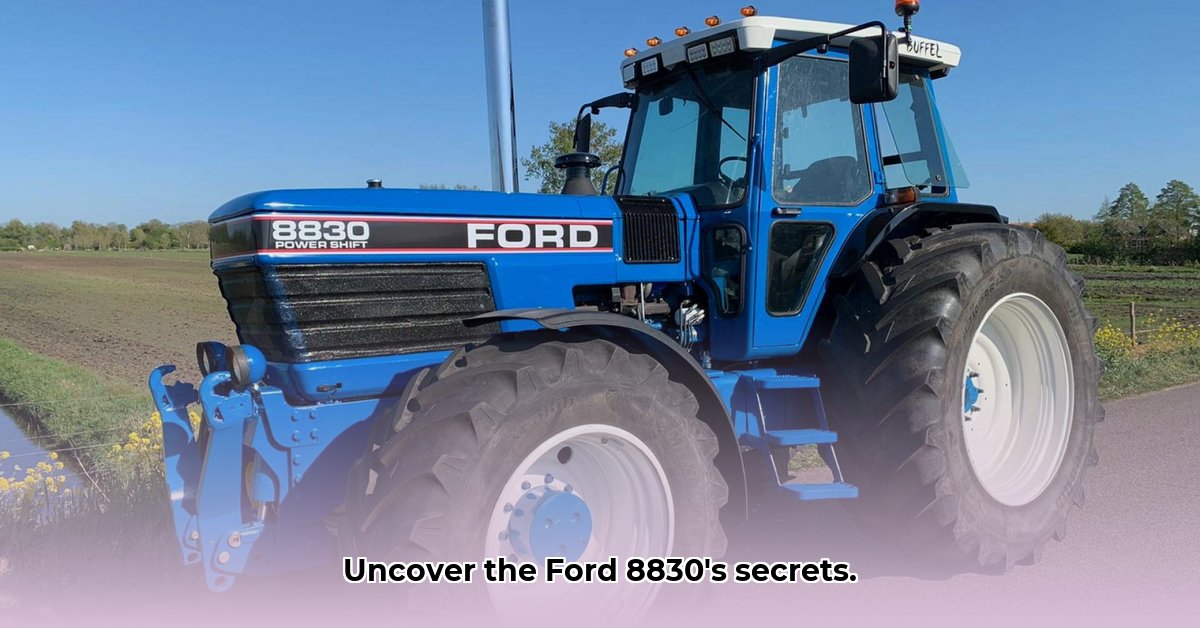
Ford 8830 Tractor: A Deep Dive for Enthusiasts
The Ford 8830 tractor, a powerful machine produced in the early 1990s, holds a significant place in agricultural history and among collectors. This detailed examination explores its specifications, historical context, and enduring appeal to enthusiasts, revealing both its strengths and limitations. For more information on similar Ford tractors, see this Ford 3930 information.
Power Under the Hood: More Than Just Horsepower
The Ford 8830 boasted a robust 6.6-liter, six-cylinder diesel engine, generating approximately 170 PTO horsepower—a substantial output for its era. This powerful engine, coupled with either a 16-speed or 18-speed transmission, provided exceptional versatility for a wide range of agricultural tasks. While precise fuel efficiency data is scarce, anecdotal evidence suggests relatively efficient operation for its power class. Further research into original service manuals would significantly enhance our understanding of its fuel consumption under various operating conditions. How did this compare to competitors of the time in terms of fuel efficiency and power-to-weight ratio?
Built for the Job: Design and Practicality
Designed specifically for row-crop farming, the 8830 prioritized maneuverability and efficiency in fields planted with crops like corn or soybeans. Key features like power steering and disc brakes significantly improved operator comfort and control, potentially reducing operator fatigue during long working hours. Did these comfort features contribute to operator productivity and, thus, to the tractor's overall market success compared to competitors lacking similar features?
A Limited Run: Production and Market Impact
Manufactured in Antwerp, Belgium, between 1990 and 1993, the 8830's relatively short production run contributes to its present rarity. Precise sales figures remain elusive, hindering a complete assessment of its market penetration. This limited production run might suggest a niche market appeal, possibly attracting farmers who favored Ford's reputation or specific design features. Further research into archival sales data is crucial for comprehending its full market impact.
Today's 8830: A Collector's Dream (and Challenge)
Today, the Ford 8830 is a highly sought-after collector's item. However, this status presents challenges. Sourcing parts can be difficult, often requiring diligent searching through online forums, specialized suppliers, and dedicated collector networks. Maintaining the tractor demands a thorough understanding of its mechanics and access to either original service manuals or collective knowledge from online communities. What unique aspects of the restoration process appeal most to collectors of vintage agricultural machinery?
Comparing Giants: Putting the 8830 in Context
A comprehensive comparison with contemporary tractors from John Deere, Case IH, and Massey Ferguson is essential for a complete understanding of the 8830's position in the market. Key factors for comparison include fuel economy, hydraulic capacity, and lifting capacity. Unfortunately, a comprehensive comparative analysis is currently limited by the lack of readily available data. Ongoing research and collaboration among agricultural historians and collectors are needed to produce a comprehensive comparative study.
Strengths, Weaknesses, and the Unknowns
Like any machine, the Ford 8830 possessed both strengths and weaknesses. Its significant horsepower and versatile transmission were clear assets, but its short production run and current parts scarcity pose significant challenges. The lack of readily available long-term reliability data also hinders a comprehensive assessment of its durability. These limitations highlight the need for further research to gain a more complete understanding of its long-term performance and maintainability.
| Strength | Weakness |
|---|---|
| Substantial Power Output | Relatively Short Production Run |
| Adaptable Transmission Options | Parts Availability Challenges (Today) |
| Row-Crop Optimized Design | Limited Long-Term Reliability Data |
| Essential Comfort Features (Power Steering, Disc Brakes) | Difficulty Finding Precise Market Data |
How to Find Replacement Parts for a Ford 8830 Tractor
Maintaining a Ford 8830 tractor often involves sourcing replacement parts. The availability of parts varies, necessitating a multifaceted approach to locating the necessary components.
Understanding the Ford 8830 Parts Landscape
The market for Ford 8830 parts comprises both readily available components from aftermarket manufacturers (often more affordable than OEM parts) and harder-to-find specialty parts. Understanding the difference between OEM and aftermarket parts is crucial for informed purchasing decisions.
Strategies for Locating Ford 8830 Parts
Effective strategies for finding parts include searching online marketplaces specializing in agricultural equipment, contacting tractor dealerships (even those primarily focused on newer models), exploring specialized salvage yards, engaging with online forums and communities dedicated to Ford tractors, and using auction sites like eBay (with caution).
Part Identification: A Crucial Step
Accurate part identification is paramount. Utilizing the tractor's owner's manual or contacting a parts supplier for assistance is crucial to avoid ordering incompatible parts. Double-checking part numbers ensures proper fit and functionality.
New vs. Used Parts: The Trade-offs
The decision between new (often with warranties) and used (more economical but potentially shorter lifespan) parts depends on budget and the urgency of the repair. Careful consideration of the trade-offs is necessary.
Preventative Maintenance: A Proactive Approach
Regular preventative maintenance (fluid changes, lubrication, etc.) significantly extends the lifespan of the tractor and reduces the need for frequent repairs and part replacements.
Key Takeaways:
- Sourcing parts for a Ford 8830 requires a multi-pronged approach.
- Online resources and specialized suppliers are essential.
- Accurate part identification prevents costly mistakes.
- Budget and repair urgency influence the choice between new and used parts.
- Preventative maintenance is crucial for long-term reliability.